


Long-Term Photocopier Lease: A Guide for UK Businesses
The longest lease isn’t always the safest choice for your business. A long term photocopier lease can give you access to equipment for an agreed period, but only if the machine and contract continue to suit your needs as your business changes.
Before committing, check what’s included, how print volumes affect the arrangement and whether servicing or consumables are covered. The regular payment alone won’t tell you which responsibilities sit with you throughout the agreement.
This guide explains how a long term photocopier lease works and what to check in the agreement. You’ll learn which details to clarify about the machine, servicing, toner, paper and support, and what to ask if your printing needs may change during the term.
Start with your day-to-day use, not just the equipment on offer. By comparing the practical commitments and raising questions with a supplier, you can decide whether a lease is a sensible fit for your business.
Table of Contents
What a long term photocopier lease means for your business
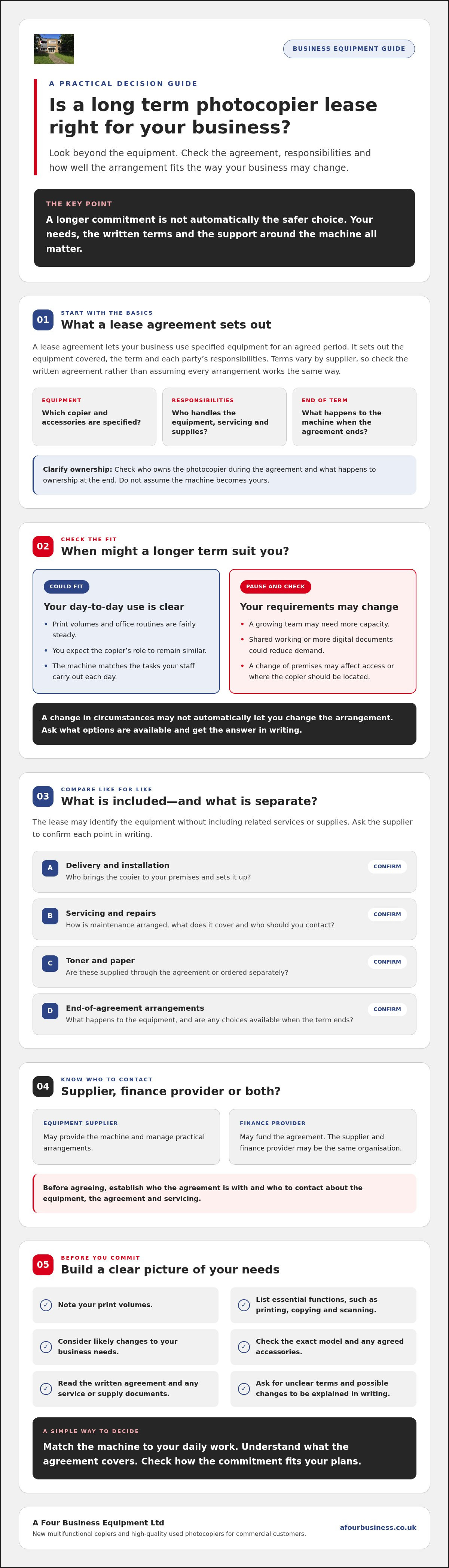
A long term photocopier lease is an agreement that lets your business use specified equipment for an agreed period in return for regular payments. Rather than buying the machine outright, you agree to the terms set out in the lease, including which equipment is covered, how long the arrangement lasts and what each party is responsible for. Terms differ between suppliers, so check the written agreement instead of assuming every lease works in the same way.
How a photocopier lease agreement works
Your business uses the copier and makes the payments set out in the agreement. The equipment supplier may provide the machine and manage practical arrangements, while a separate finance provider funds the agreement. Sometimes the supplier and finance provider are the same organisation. Ask who the agreement is with and who to contact about the equipment, payments and servicing.
Check the payment schedule and agreed term. Confirm who owns the photocopier during the agreement and what happens to ownership when it ends. Don’t assume you’ll own the machine after the final payment. If the proposal refers to a finance lease, read the agreement carefully and ask the provider to explain how that arrangement differs from other lease types.
Leasing is different from buying equipment outright. A purchase can be separate from an ongoing service arrangement, and photocopier servicing can also be arranged under a separate contract. Make sure you know which document covers the equipment and which covers maintenance.
What a long term agreement may cover
The lease may identify the equipment you can use, but that doesn’t mean related services or supplies are included. Check the exact model and any agreed accessories, then look for separate terms covering servicing and consumables. These may be offered under another agreement or may not be part of the lease at all.
Before you sign, ask the supplier to confirm in writing whether the arrangement includes:
Delivery and installation: who brings the copier to your premises and sets it up.
Servicing and repairs: how maintenance is arranged, what it covers and who to contact if the machine needs attention.
Toner and paper: whether these are supplied through the agreement or need to be ordered separately.
End-of-agreement arrangements: what happens to the equipment and whether any choices are available when the term ends.
Keep the lease agreement and any service or supply documents together. Check that verbal explanations match the written terms, and ask for any unclear points to be clarified before you agree. This makes it easier to see what you’re responsible for once the photocopier is part of your everyday office routine.
When a long term photocopier lease suits your business
A longer agreement may suit you if reliable access to a photocopier matters to daily work and you have a clear idea of what your business will need during the term. It can help you plan around a consistent piece of equipment. The trade-off is flexibility: you’re agreeing to set terms, and a change in circumstances may not automatically let you change the arrangement.
Signs a longer commitment may fit
Consider a long term photocopier lease if your print volumes and office routines are fairly steady, and you expect the copier’s role to remain similar. Planning an equipment replacement can also help avoid disruption, provided the proposed machine suits the tasks your staff carry out each day.
Be specific about the functions your team relies on, such as printing, copying or scanning. Check that the equipment and any agreed support match those tasks, rather than relying on a broad description like “multifunctional”. HMRC’s guidance explains the economic substance of a finance lease and gives photocopiers as an example of equipment that may be financed this way. That classification does not show whether a particular arrangement fits your operational plans, so review the actual proposal and agreement.
When flexibility deserves more attention
Pause before committing if you expect changes that could affect how or where your business prints. A growing team may need more capacity, while shared working or increased use of digital documents could reduce demand. A change of premises may also affect who needs access to the machine and where it should be located.
Before signing, ask the supplier what options, if any, are available if your requirements change. Get the answer in writing and check whether it applies to print volumes, staffing, premises or equipment. Don’t assume you can leave early, upgrade the copier or alter the terms unless the agreement confirms this.
When comparing photocopier leasing, consider the equipment, service arrangements and agreement terms together. If you’d like to discuss how a copier could suit your working needs, speak with A Four Business Equipment Ltd before requesting a proposal.
Compare lease terms, equipment and support before committing
A useful comparison looks beyond the headline payment description. Two proposals may seem similar but cover different equipment, service arrangements or consumables. Put the written details side by side, and distinguish confirmed inclusions from anything optional or still to be agreed.
Mark each item as included, optional or to be confirmed. If a supplier describes an inclusion verbally, ask for it to be recorded in the relevant agreement. This helps you compare proposals like for like and identify responsibilities that sit outside the lease.
Check the copier matches your print requirements
Before comparing equipment, write down what your team actually does. Note approximate print volumes, how often you use colour, whether you scan documents and the paper sizes or types you handle. Then consider whether an all-in-one or multifunctional copier suits those tasks. Ask the supplier to explain proposed features in practical terms, and check the written specification rather than relying on a model name alone.
Clarify servicing, supplies and end-of-term arrangements
Ask who arranges maintenance, how staff raise a service request and what the service agreement covers. Check separately whether toner and paper are part of the arrangement or need to be sourced by your business. If you’re also considering a used machine, this guide to service contracts for used photocopiers can help you frame questions about service cover.
Finally, get a clear written explanation of what happens when the lease agreement ends. Don’t assume you can keep, return or replace the machine on particular terms unless the supplier confirms this. A careful comparison gives you a clearer view of the practical commitments involved in a long term photocopier lease.
Assess your needs before choosing a long term photocopier lease
A clear brief helps suppliers recommend equipment and terms that reflect how your office works. Before requesting a proposal, gather practical details about current use and possible changes. This gives you a basis for comparing options and identifying questions that need a written answer.
Build a clear business requirements checklist
Start with the people and tasks the copier needs to support. Note who will use it, what documents they produce and how often they print or scan. Separate must-haves from preferences so the proposal focuses on what your team needs.
Print use: Record your usual print volumes and whether colour is essential for particular documents.
Everyday functions: List the tasks you need, such as printing, copying, scanning or handling particular paper types.
Workflow issues: Note current frustrations, such as repeated manual scanning or delays when several people need the machine.
Likely changes: Consider possible changes to staff numbers, office arrangements, document volumes or the way your business works.
Also note which service and supply responsibilities you would like included, if available, and which points need clarification. For wider ideas on managing print use, read these office printing efficiency strategies.
Ask suppliers focused questions
Use your checklist to request written details about the proposed equipment, agreement term, servicing and consumables. Ask who handles service requests, whether toner and paper are included or arranged separately, and what happens if your business requirements change. Don’t assume a change, upgrade or early end is available. Ask the supplier to explain any options and record the answer.
Written inclusions matter because they show exactly what the supplier has agreed to provide and what remains your responsibility.
Keep each proposal with its supporting documents so you can compare the same points across suppliers. If you’d like help discussing copier requirements for your business, talk to A Four Business Equipment Ltd before requesting a proposal.
Plan your next steps with an experienced photocopier supplier
Bring the agreement, the equipment and your day-to-day needs together before deciding. A long term photocopier lease is more likely to suit your business when the proposed machine fits your work, service responsibilities are clear and the term makes sense for your plans. Keep a written record of what the supplier confirms, especially if servicing, consumables or end-of-term arrangements sit outside the lease.
What to prepare before contacting a supplier
Gather your current copier details and a simple outline of how your team prints, copies and scans. Note the functions you rely on and any problems you’d like new equipment to address.
List questions about the equipment, lease agreement, servicing, toner, paper and what happens when the term ends. Include likely business changes, such as a move, staffing changes or a shift in document volumes. This gives the supplier useful context without assuming your needs will stay fixed.
Discuss a suitable business photocopier solution
A Four Business Equipment Ltd supplies new multifunctional copiers and high-quality used photocopiers to commercial customers, and provides photocopier servicing. The company has been in business since 1988. Its equipment and maintenance services can inform a discussion about your business requirements, but you should still confirm what a particular lease includes and who provides the finance.
Use your requirements list to ask which equipment could suit your work and what separate arrangements may be needed for service or supplies. If you’re considering a lease through a supplier or finance provider, ask them to set out the equipment, responsibilities and confirmed inclusions in writing. Read the documents before you agree, and ask for clarification wherever the wording leaves a question unanswered.
A straightforward discussion can help you identify what to compare without committing before you’re ready. To talk through the photocopier needs of your business, discuss your photocopier requirements with A Four Business Equipment Ltd.
Choose a copier arrangement that fits your plans
A long term photocopier lease is worth considering when the equipment and agreed responsibilities suit both your everyday work and your business plans. Compare proposals by checking the copier’s functions, the term, servicing, consumables and what the supplier has confirmed in writing.
Before you decide, note your print and scanning needs and consider whether staffing, premises or document volumes could change. Clear answers can help you judge whether a longer commitment offers the continuity you want without limiting flexibility you may need.
A Four Business Equipment Ltd supplies new multifunctional copiers and high-quality used photocopiers to commercial customers, and provides photocopier service and maintenance. Any lease inclusions should still be confirmed for your specific arrangement.
Ready to discuss your equipment needs? Talk to A Four Business Equipment about your business photocopier requirements and compare options against your needs.
Frequently Asked Questions
What is a long term photocopier lease?
A long term photocopier lease lets your business use specified equipment for an agreed period in return for regular payments. The agreement sets out the equipment, term and responsibilities, which can vary between suppliers. Check who owns the copier during the agreement and what happens when it ends. Servicing, toner and paper may be covered by separate arrangements, so confirm any inclusions in writing.
Is a long term photocopier lease right for a small business?
It may suit a small business if access to a particular copier supports regular work and you have a reasonable idea of future needs. Consider your print volumes, essential functions and likely changes to staffing or working arrangements. A longer commitment may offer continuity, but could limit flexibility if your needs shift. Compare the agreement with other equipment options and check what the supplier says about changes.
What should a photocopier lease agreement include?
A photocopier lease agreement should identify the equipment, agreed term, payment schedule and responsibilities of the parties. Check who owns the copier during the agreement and what happens at the end. Look for clear information on delivery and installation, servicing, toner and paper, but don’t assume these are included. If a service or supply is covered by a separate document, read that too and ask for unclear points to be confirmed in writing.
Can I change my photocopier during a long term lease?
That depends on the terms agreed with your supplier or finance provider. Don’t assume you can upgrade, replace or change the copier during the lease, or end the agreement early. Ask what options apply if print volumes, staffing or business premises change, and have the answer recorded in writing. Before signing, check the agreement for relevant conditions so you understand what flexibility, if any, is available.
Does a photocopier lease include servicing and toner?
Not automatically. A lease may cover the equipment, while photocopier servicing, toner and paper may be arranged separately. Check the proposal and any supporting service or supply agreement to see what’s included, who provides it and how to request support or supplies. If an item is optional or hasn’t been confirmed, ask the supplier to clarify it in writing before you agree.
What happens at the end of a photocopier lease?
What happens at the end depends on the terms in your lease agreement. Check whether it explains what you need to do with the copier, who to contact and whether any end-of-agreement choices are available. Don’t assume you’ll own the equipment or can renew, return or replace it on particular terms. Ask the supplier to explain the process and confirm the details in writing before you sign.


Comments